The Industrialization of Initial Access
The underground economy has moved far beyond simple password dumps. In 2026, the primary currency of the dark web is active session material and verified domain access. Adversaries have realized that fighting through EDR and Next-Gen Antivirus (NGAV) is inefficient when you can simply purchase an authenticated VPN session or a stolen Okta token.
The dark web is now a highly structured supply chain. To defend against it, your threat intelligence program must operate at the same level of technical sophistication.
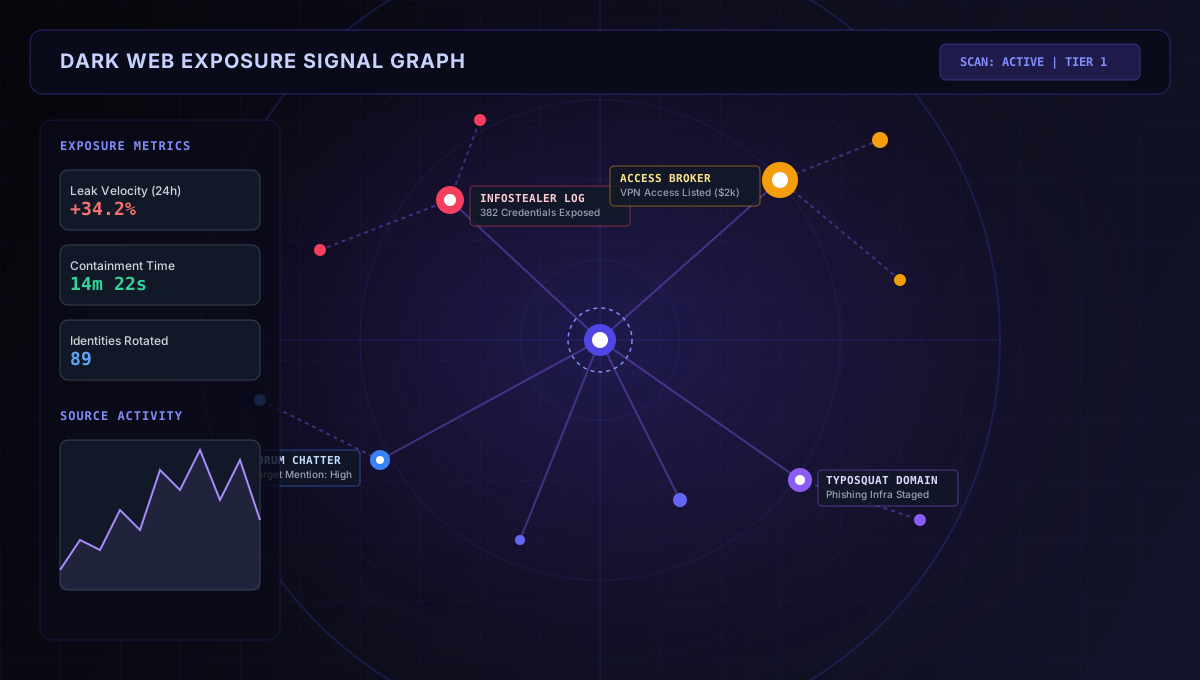
The Infostealer Epidemic: RedLine, Lumma, and Raccoon
Infostealers are malware variants designed specifically to silently extract browser profiles, crypto wallets, and system configurations. Distributed via malvertising, SEO poisoning, and cracked software, they are the fuel for the Initial Access Broker (IAB) market.
Why Passwords Don't Matter (Session Cookie Theft)
Multi-Factor Authentication (MFA) is heavily relied upon, but infostealers bypass it entirely by exfiltrating theCookies.sqlite database from Chromium and Gecko-based browsers. Attackers import these cookies into antidetect browsers (like Sphere or Multilogin), cloning the victim's session, IP geolocation, and browser fingerprints (Canvas, WebGL). The attacker gains immediate access to AWS, GitHub, or M365 without ever triggering an MFA prompt.
Parsing Stealer Logs for Early Warning
Modern Threat Intelligence requires ingesting terabytes of raw stealer logs from telegram channels and underground markets. * Automated Extraction: Using custom parsers to rip.txt and .log files, extracting hostnames, AD domains, and specific SaaS URLs.
* Identity Correlation: Matching extracted user.domain.local strings against internal Active Directory forests to identify which employee endpoint was compromised.
Tracking Infrastructure: JA3, JA4, and JARM Fingerprinting
Adversaries constantly rotate IPs and domains, making traditional IOCs (Indicators of Compromise) obsolete within hours. To track threat actors effectively, we must profile their infrastructure setup.
* JA3/JA4 TLS Fingerprinting: C2 servers (like Cobalt Strike, Sliver, or Havoc) often use specific TLS configurations. By analyzing the TLS Client Hello packets, we generate JA4 fingerprints. Even if the actor changes their IP and domain, their backend infrastructure stack emits the same fingerprint, allowing us to proactively block newly spun-up C2 nodes. * Graph Database Correlation: Utilizing graph databases (like Neo4j), we map relationships between autonomous system numbers (ASNs), registrars, SSL certificates, and SSH host keys to illuminate entire adversary networks before they launch a campaign.
The 2026 Detection and Response Stack
Waiting for a dark web analyst report is a failure of automation. Telemetry must be piped directly into response workflows:
- Continuous Ingestion: API integrations with tier-1 underground forums and stealer log aggregators.
- Session Invalidation Pipeline: When an employee's session cookie is detected in a Lumma log, an automated webhook triggers Okta/Entra ID to forcefully terminate all active sessions and rotate the user's tokens globally.
- Third-Party Risk (Supply Chain): It's not just your employees. If a third-party vendor's VPN credentials are listed by an IAB, you must sever the B2B VPN tunnel immediately.